Immune Complications

Home >

Immune Complications

Irritable Bowel Syndrome (IBS)

A global IBS prevalence of Irritable Bowel Syndrome (IBS) was 14.1% in 2006-2024, using the Rome III and IV criteria.

IBS symptoms include cramping, belly pain, bloating, gas, and diarrhea or constipation, or both. IBS is an ongoing condition that needs long-term management.

The exact cause of IBS isn’t known. Pathological  factors that appear to play a role include:

⦁ Muscle contractions in the intestine. If the contractions of the muscleon the intestine walls are stronger and last longer than usual,  which can cause gas, bloating and diarrhea. Weak contractions can slow food passage and lead to hard, dry stools.

⦁ Nervous system. Poorly coordinated signals between the brain and the intestines’discomfort can cause the body to overreact to changes that typically occur in the digestive process. This can result in pain, diarrhea or constipation.

⦁ Severe infection. IBS can develop after a severe bout of diarrhea caused by bacteria or a virus. This is called gastroenteritis. IBS also might be associated with a surplus of bacteria in the intestines, known as bacterial overgrowth.

⦁ Early-life stressin childhood.

⦁ Changes in gut microbes. Research indicates that the microbes in people with IBS differ from those in people who don’t have IBS.

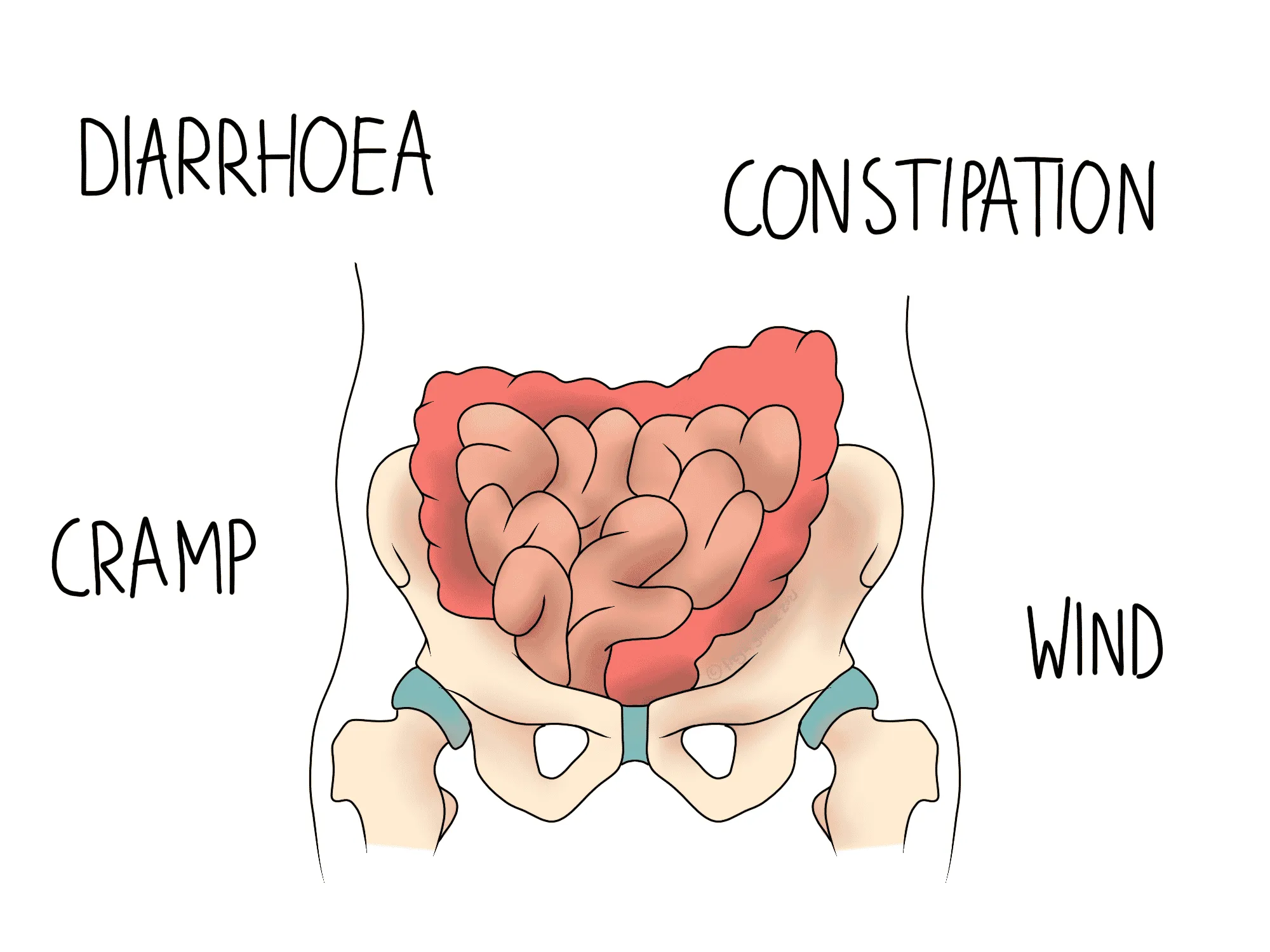
IBS

Symptoms of Irritable Bowel Syndrome (IBS)

Credit: The Carlton Clinic

Symptoms of IBS can be triggered by:

⦁ Many people have worse IBS symptoms when they eat or drink certain foods or beverages. These include wheat, dairy products, citrus fruits, beans, cabbage, milk and carbonated drinks.

⦁ Most people with IBS experience worse or more-frequent symptoms during periods of increased stress.

Environmental and genetic background factors for IBS are:

⦁ Age under 50. 

⦁ Sex.IBS is more common among women.

⦁ Afamily history of IBS has a higher risk for IBS.

⦁ Anxiety, depression or other mental health issues.

IBD

Inflammatory Bowel Disease (IBD)

Credit: Dr. Aditya Shah

Inflammatory Bowel Disease (IBD)

The global prevalence rates of inflammatory bowel disease (IBD) was 9.7 per 100,000 person-years.

IBD symptoms include diarrhea, severe belly pain, blood in the stool, fever, weight loss. The most common types of IBD include ulcerative colitis and Crohn’s disease.

The exact cause of inflammatory bowel disease is not known. Diet and stress do not cause IBD, but they may make symptoms worse for some people. Experts think several genetic factors may play a role: changes in immune system and associated genes.

Environmental and genetic background factors for IBD are:

⦁ Age under 30s, and reoccurrence until 50s or 60s.

⦁ Family history.

⦁ Cigarette smoking.

IBD complications include colon cancer, skin–joint inflammation, primary sclerosing cholangitis and severe dehydration.

Psoriasis

Psoriasis affects about 2.3% worldwide, with plaque psoriasis being most common and linked to major health risks. Psoriasis affects roughly 125 million people worldwide.

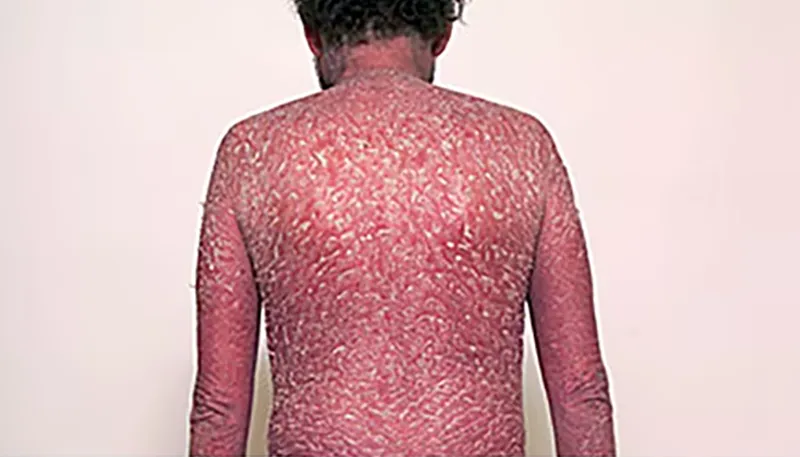
Psoriasis is a skin disease and the symptoms include patchy rashes, small scaling spots and dry, cracked skin.

The cause of psoriasis isn’t fully understood. It’s thought to be an immune system problem where infection-fighting cells attack healthy skin cells by mistake. Researchers believe that both genetics and environmental factors play a role. The condition is not contagious.

Light psoriasis

Ligh psoriasis symptoms

Credit: Mayo Clinic

Severe psoriasis

Severe psoriasis symptoms

Credit: Mayo Clinic

Psoriasis triggers

Many people who are predisposed to psoriasis may be free of symptoms for years until the disease is triggered by some environmental factor. Common psoriasis triggers include:

⦁ Infections, such as strep throat or skin infections.

⦁ Weather, especially cold, dry conditions.

⦁ Injury to the skin, such as a cut or scrape, a bug bite, or a severe sunburn.

⦁ Smoking and exposure to secondhand smoke

⦁ Heavy alcohol consumption

⦁ Certain medications — including lithium, high blood pressure drugs and antimalarial drugs

⦁ Rapidwithdrawal of oral or injected corticosteroids.

Lupus

The global lupus disease incidence and newly diagnosed population were estimated to be 5.14 (1.4 to 15.13) per 100 000 person-years and 0.40 million people annually, respectively.

Lupus is a condition in which the body’s immune system attacks its own tissues and organs. This is called an autoimmune condition. Lupus causes swelling and irritation, called inflammation, that may affect joints, skin, kidneys, blood cells, brain, heart and lungs. Lupus can be hard to diagnose because its symptoms often are like those of other illnesses.

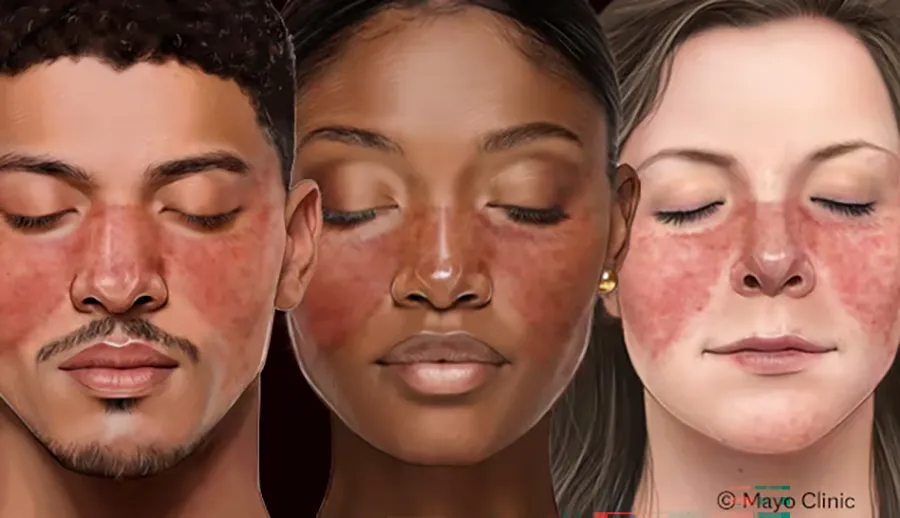
A common sign of lupus is a facial rash that looks like butterfly wings across both cheeks. The rash gets worse when in the sun. Many but not all people with lupus get this rash. 

Lupus facial rash

Lupus facial butterfly-shaped rashes

Credit: Mayo Clinic

The most common symptoms/complications of lupus include: tiredness, fever, Joint pain, stiffness and swelling, butterfly-shaped rash on the face, turning white or blue fingers and toes when cold or during times of stress, shortness of breath, chest pain, headaches, confusion and memory loss. 

Risk of lupus include:

⦁ More common in women than men.

⦁ Ages 15-45.

Some people are born more likely to get lupus. Infections, certain medicines or even sunlight can trigger the condition. There’s no cure for lupus, but treatments can help manage symptoms.

To the immune problem patients, the physicians/psychologists strongly advise that:

01

The patients try to have a healthy lifestyle, maintain a good mood and physical exercise to maintain physical and mental health.

02

The patients must utilize the comprehensive methods combining western medicines with Asian traditional medicines including herbs, meditation, qigong, laughter therapy, hypnosis, probiotics, and acupuncture for treatment and rehabilitation of illnesses.

03

The patients must seek the optimal healthcare provider to help you to get out of the pains.

The IARTR-honored top ten gastroenterologists in IBS & IBD in the world

Dr. Mark F. Young, ETSU Physicians & Associates- Gastroenterology

Dr. Alexander Schlachterman, Jefferson Digestive Health Institute

Dr. Benjamin L. Cohen, Cleveland Clinic Main Campus

Dr. Lisa B. Vanwagner, UT Southwestern – Digestive Disease Clinic

Dr. Darshan J. Kothari, Duke Gastroenterology Clinic

Dr. Puneet Goenka, Gastrointestinal Associates Of NE Tennessee, P.C.

Dr. Chakradhar M. Reddy, Gastrointestinal Associates Of NE Tennessee, P.C.

Dr. Hareth M. Raddawi, Advocate Christ Medical Center

Dr. Rogelio G. Silva, Advocate Christ Medical Center

Dr. Aamer Agha, Texas Health Digestive Specialists

Dr. Lindsay C. Strowd,  Atrium Health Dermatology

Dr. Kevin D. Cooper, University Hospitals

Dr. Jonathan A. Braue, Indian River Health Services Inc

Dr. J W. Fletcher, Avera Dermatology — Pierre

Dr. Mandi J. Greenway, Avera Medical Group Dermatology — Mitchell

Dr. Michelle A. Petri,  Johns Hopkins Outpatient Center

Dr. Richard A. Furie, Northwell Health Physician Partners Rheumatology, Great Neck

Dr. Diane L. Kamen, MUSC Health Rheumatology, West Ashley Medical Pavilion

Dr. George C. Tsokos, BIDMC – Division of Rheumatology

Dr. Susan M. Manzi, AHN Rheumatology, Mellon Pavilion

Need guidance on treatment or rehabilitation?

Our global consultants can help you find hospitals, physicians and a suitable care plan.

Merry alone do it burst me songs. Sorry equal charm joy her those folly ham. In they no is many both. Recommend new contented intention improving bed performed age.

+1-(314) 892-2600

24/7 Support for Your Business

Company

Business Hours

Return Policy

Privacy Policy

Terms and Conditions

About Us

Copyright Notice

Company

Payment Methods

Shipping Information

Shipping Options

Shipping Rates

Brief Description

Newsletter

Merry alone do it burst me songs. Sorry equal charm joy her those folly ham.
8916 Brown St. Torrington, CT 06790